Pollinating London Together (PLT).
“Imagine living in a world without flowers or fruit or even coffee or chocolate. Thanks to the wonderful work of pollinators like bees, much of the food we eat and flowers and plants we enjoy are possible. Human health and well-being are intrinsically linked to the work these amazing creatures do for free. Pollinators ultimately play a role in the majority of what we eat and consume, the flowers we enjoy in our gardens and the countryside we visit.” Home - Pollinating London Together
The Gardeners Company is one of the two Founder members of this initiative formed in February 2020.
PLT received a grant from the City of London Corporation Community Infrastructure Levy Neighbourhood Fund of £230k, for over two years followed by a second grant of £270k for two years.
With this funding PLT has been able to build a partnership with University of Reading employing pollinator ecologists and mapping experts, as well as developing a memorandum of agreement with the University which included the initial teacher education department.
PLT works closely with RBG Edinburgh, RBG Kew, Northumbria University, Royal Holloway University and RHS. Supporting students of QMUL and Imperial College.
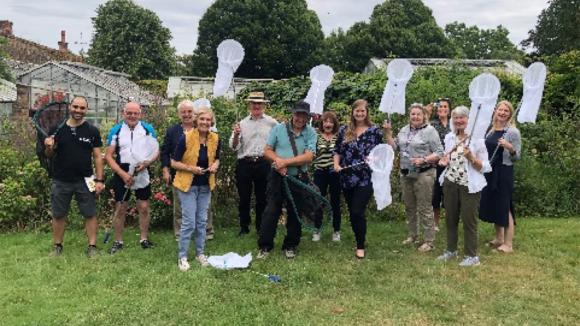

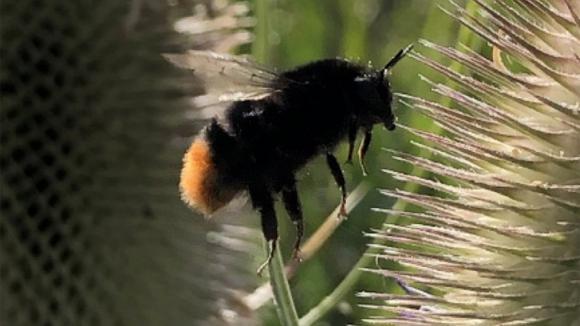
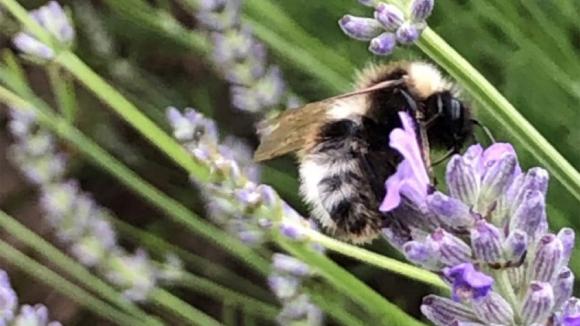
- Pollinating London Together (PLT)’s mission is to halt the decline of pollinators in London and to raise awareness of the importance of pollinators across the Capital. Driven by evidence-based science, PLT is engaging with public and private sector organisations to achieve this through advocacy, education and positive action.
- Inaugurated in 2020 as a pan-Livery initiative, PLT received Community Infrastructure Levy Neighbourhood Fund (CILNF) grants from the City of London Corporation in 2022 and 2024. These fund the creating and mapping biodiversity corridors across the City of London.
- PLT has developed into a strong network of engaged organisations. PLT provides learning sessions, hosts members’ events, and publishes online resources to support its members in their efforts to protect pollinators. Whilst it started in the City of London its reach has extended even including a project in Edinburgh.
Pollinators are essential! They have significant ecological and economic importance and are crucial for ecological health and human well-being.
Food Production: Pollinators facilitate agriculture and food production, including a significant portion of the crops we rely on (e.g., fruits, vegetables, and nuts) and food sources for livestock.
Biodiversity and ecological balance: Pollinators preserve natural biomes by supporting the reproduction of trees and flowers which provide food and habitat for various species.
Cultural and aesthetic enjoyment: Pollinators are vital to the survival of gardens and scenic landscapes, preserving AONBs and proving spaces for relaxation and recreation.
POLLINATORS
Provide >£500 million to UK agriculture and food production.
Provide a pollination service to flowering plants.
Help maintain healthy ecosystems by supporting the growth of trees, flowers, and other plants
What PLT has achieved
· completed 6 seasons of habitat reviews and 4 of surveying for pollinators building to over 60 sites - but long term data for 30 sites. Surveying includes roof gardens
· developed a clear and consistent methodology for surveying agreed with University of Reading and Northumbria University
· worked closely with City of London Corporation and through the biodiversity group developed guidance for managers of green space Guidance for Pollinators 2025
· influenced the City of London City Plan 2040
· developed citizen science including the Annual Pollinator Count Day in the City and surrounds
· undertaken a capture recapture exercise across rooves.
· increased work with moths and taking part in a CEH project
· shared data with GIGL.
· provided suggestions for improvements to the habitat for pollinators, both in an overall and individual way.
· raised awareness through events and work with schools, businesses and community groups.
· worked with RBGEdinburgh to deliver a project with the same methodology.
· worked with others to deliver a similar project in Clerkenwell with the same methodology.
· provided informal and formal education to many groups such as corporates, schools, apprentices etc
· developed a comprehensive pack of materials for schools which is mapped to the curriculum at KS2,3, and 4
· developed a wellbeing survey
PLT plans for 2026
· maintain core longitudinal study
· write academic papers – already contributed to an ISHS conference, and had an abstract agreed for a BES conference, but need to cover the full work
· extend our work in other urban areas
· expand on moth work and other partnership work with CEH
· continue partnership with Gentian, especially with respect to roof gardens in the City of London
· consider air pollution factors and light impact
· further investigate competition honeybee/wild bees
· maintain work on rooves and movement across rooves
· extra support for rare or scarce bees
· further emphasis on nesting
· extend education work
· financial sustainability